Loading…
Venue: Montreal 4-5 clear filter
Sunday, May 3
 

6:30pm EDT

Opening Reception
Sunday May 3, 2026 6:30pm - 8:30pm EDT
Reconnect with colleagues at a catered opening reception in the hotel’s elegant Montreal Ballroom. Drinks (alcoholic and non-alcoholic) and hors d'oeuvres will be provided.

We extend our sincere gratitude to the following ARLIS/NA chapters whose generous contributions made the opening reception possible: Central Plains, Mid-Atlantic, Midstates, Mountain West, New England, New York, Northern California, Northwest, Southern California, and Twin Cities.
#food
Sunday May 3, 2026 6:30pm - 8:30pm EDT
Montreal 4-5
 
Monday, May 4
 

8:45am EDT

Conference Welcome and Land Acknowledgement
Monday May 4, 2026 8:45am - 9:00am EDT

Speakers
avatar for Liv Valmestad

Liv Valmestad

Architecture/Fine Arts library, University of Manitoba, Art Librarian, President ARLIS/NA

avatar for Hélène Brousseau

Hélène Brousseau

Digital Media and Visual Resources Librarian, Concordia University
ARLIS 2026 CPAC (programming), Member of ARLIS/MOQ chapter
PC

Pamela Caussy

VCR (Visual Collections Repository) Manager, Concordia University
ARLIS 2026 CPAC (local arrangements), Member of ARLIS/MOQ chapter
avatar for Adèle Flannery

Adèle Flannery

Visual arts and design librarian, Université du Québec à Montréal
ARLIS 2026 CPAC (local arrangements), Member of ARLIS/MOQ chapter
avatar for Gwen Mayhew

Gwen Mayhew

Head, Collection Access, Canadian Centre for Architecture
ARLIS 2026 CPAC (programming), Member of ARLIS/MOQ chapter

Gwen Mayhew has been the head of collection access at the Canadian Centre for Architecture (CCA) in Montreal since 2019. She leads a fabulous team of reference librarians, cataloguers and a circulation assistant, all of whom are focused on facilitating both onsite and remote acce... Read More →
Monday May 4, 2026 8:45am - 9:00am EDT
Montreal 4-5

9:00am EDT

Diversity Forum Speaker: Camille Larivée
Monday May 4, 2026 9:00am - 10:00am EDT
The ARLIS/NA Diversity & Inclusion Committee is excited to welcome Camille Larivée, who will be giving a presentation entitled Resistance is Our Only Armour: Art as Insurrection. The presentation will be in English.

Camille Larivée is an award-winning street artist, independent curator, writer, and cultural worker based in Tiohtià:ke/Mooniyaang/Montreal, on Turtle Island (so-called Canada). Camille’s artistic and curatorial work is focused on amplifying what the dominant culture tries to suppress; from making space for invisibilized collective memories in urban public space, to reminders of the urgency of caring for local biodiversity. Camille will speak about their public art projects, exhibitions, and publications that they have brought to fruition in the past decade, and art as a force for challenging the status quo and claiming space and power.

Camille will trace persistent themes of combatting erasure and making the marginalized visible from the beginnings of their street art interruptions during the infamous 2012 Quebec Student Strike, through the foundation of their collective project, Unceded Voices: Anticolonial Street Artists Convergence, to their work with the Indigenous Curatorial Collective/Collectif des commissaires autochtones (ICCA) and their book about Francophone Indigenous art in Quebec, D’horizons et d’estuaires – Entre mémoires et créations autochtones. Camille will speak to how they prioritize the actions of diversity and accessibility in their current role as the Executive and Artistic Director at the Montréal, arts interculturels (MAI), a pioneering multidisciplinary venue in the Canadian art scene, and love and reverence in their independent artistic and curatorial practice today.

//\\

Le comité Diversité et inclusion de l’ARLIS/NA est ravi d’accueillir Camille Larivée.

Le Comité Diversité et inclusion de l'ARLIS/NA est ravi d'accueillir Camille Larivée, qui fera une présentation intitulée : « La résistance est notre seule armure : l'art comme insurrection ». La présentation sera donnée en anglais.

Camille Larivée est une artiste de rue primée, une commissaire indépendante, une écrivaine et une actrice du secteur culturel basée à Tiohtià:ke/Mooniyaang/Montréal, sur l’île de la Tortue (ce qu’on appelle le Canada). Le travail artistique et curatorial de Camille vise à mettre en lumière ce que la culture dominante tente de réprimer ; qu’il s’agisse de faire une place aux mémoires collectives invisibilisées dans l’espace public urbain ou de rappeler l’urgence de préserver la biodiversité locale. Camille parlera de ses projets d’art public, de ses expositions et de ses publications réalisés au cours de la dernière décennie, ainsi que de l’art en tant que force permettant de remettre en question le statu quo et de revendiquer un espace et un pouvoir.

Camille retracera les thèmes récurrents de la lutte contre l’effacement et de la visibilité des personnes marginalisées, depuis les débuts de ses interventions d’art urbain lors de la célèbre grève étudiante de 2012 au Québec, en passant par la création de son projet collectif, Unceded Voices : Anticolonial Street Artists Convergence, jusqu’à son travail avec l’Indigenous Curatorial Collective/Collectif des commissaires autochtones (ICCA) et son livre sur l’art autochtone francophone au Québec, D’horizons et d’estuaires – Entre mémoires et créations autochtones. Camille expliquera comment elle accorde la priorité à la diversité et à l’accessibilité dans son rôle actuel de directrice générale et artistique de Montréal, arts interculturels (MAI), un lieu multidisciplinaire pionnier de la scène artistique canadienne, ainsi qu’à l’amour et au respect dans sa pratique artistique et curatoriale indépendante d’aujourd’hui.
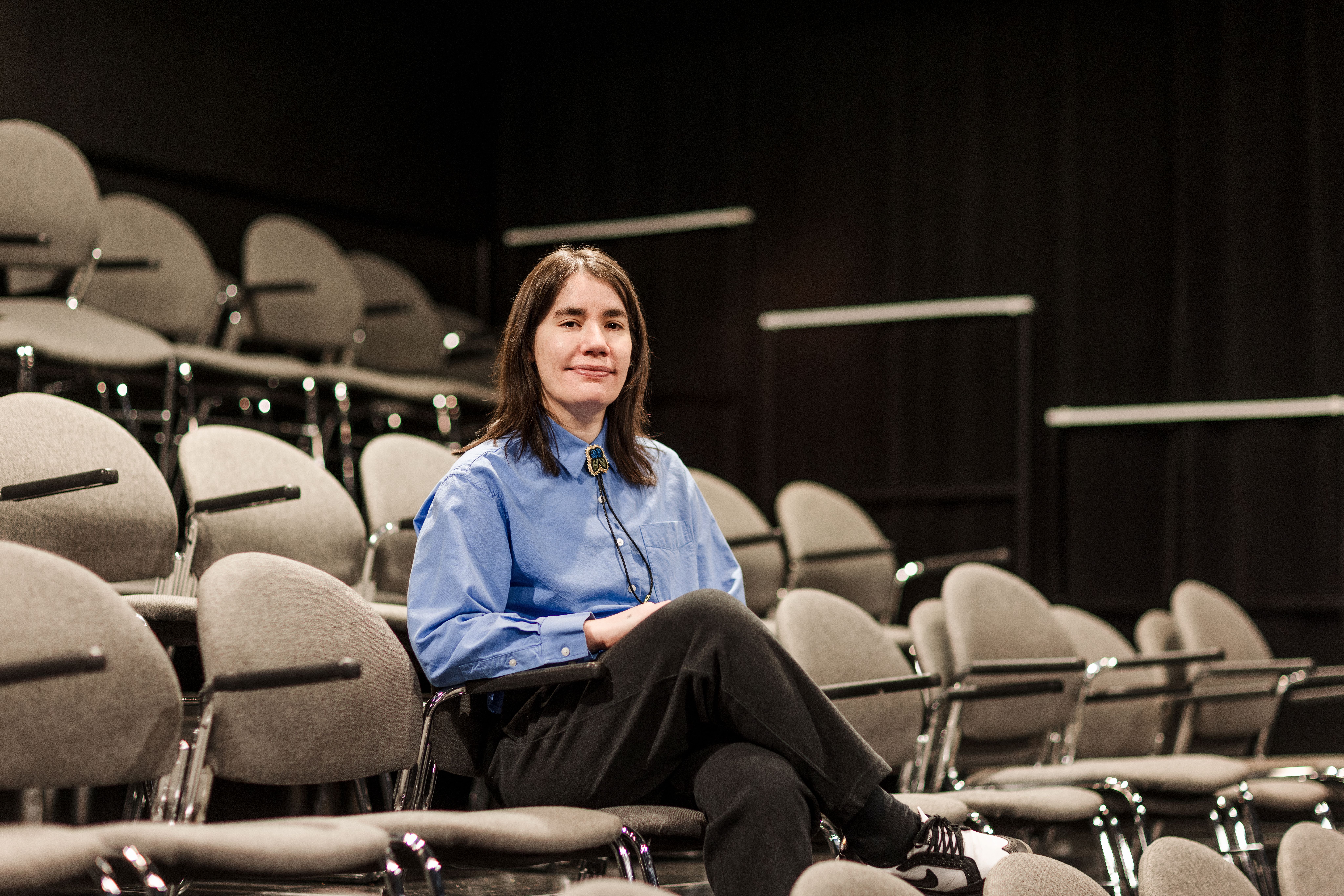
Portrait of Camille Larivée, © Katya Konioukhova
#madeinquebec
Monday May 4, 2026 9:00am - 10:00am EDT
Montreal 4-5

10:30am EDT

It's All Coming Back: A Roundtable Discussion on Reference in Art Libraries
Monday May 4, 2026 10:30am - 11:45am EDT
This roundtable session is a follow-up to the first "Reference in Art Libraries: a roundtable discussion" offered at the ARLIS Conference 2024 in Pittsburgh. Reference providers will lead discussion by answering questions investigating the current state of reference collections and services offered in art libraries, as well as reflecting back on changing approaches over time. Speakers will contribute examples from their work weeding, shifting, adjusting collections, and providing research consultations with students and researchers. The theme of resistance will also inform these conversations. Are we resisting traditional approaches to reference services and spaces? How can providing reference interactions push back against AI offerings of research support? This program is also timely as the end of 2025 marked the 20th anniversary of "Guide to the Literature of Art History" volume 2 (ALA Editions, 2005).

Moderators
avatar for Jenny Davis

Jenny Davis

Research Services Librarian, Avery Architectural & Fine Arts Library, Columbia University
avatar for Annalise Welte

Annalise Welte

Librarian for Research Services, Institute of Fine Arts, New York University
Speakers
avatar for Chris Landry

Chris Landry

Scholarly Communications Librarian, OCAD University
avatar for Joey Vincennie

Joey Vincennie

Reference Lead Librarian, Frick Art Research Library, The Frick Collection
Joey Vincennie (he/him) is the Reference Lead Librarian at the Frick Art Research Library. His research on artists' books and art book fairs has been published in Art Documentation. Joey currently serves as a co-moderator for ARLIS-L and as a member of the Travel Awards subcommittee... Read More →
avatar for Jenna Dufour

Jenna Dufour

Research Librarian for Visual Arts, University of California, Irvine
TC

Tess Colwell

Arts Librarian for Research Services, Yale University
Sponsors
Monday May 4, 2026 10:30am - 11:45am EDT
Montreal 4-5

1:15pm EDT

Reframing Resistance: Reimagining Libraries through Reuse
Monday May 4, 2026 1:15pm - 2:45pm EDT
The information landscape is rapidly shifting, from print to electronic and from still text to immersive media. Libraries must employ adaptive strategies to navigate this new terrain, not merely resisting the seismic shift, but reinventing our collections. As we move into a digital landscape, art and design students still yearn for the tactile and material experiences that libraries offer. Compounding this challenge is the era of scarcity in which we find ourselves. As art librarians, we can reframe our thinking—not by seeking new resources, but by exploring what we might do with what we already have. What can we reuse or reimagine to stimulate renewed enthusiasm for research and learning?

Art librarians can embrace change by reconsidering how our collections relate to the past, present, and future. This panel centers on four case studies that highlight these time frames followed by a moderated discussion about the application of this sustainability mindset to the broader field of information work.

In REviving Discards, we learn about a library undergoing a transition to a more digitally-focused resource, where print books are being replaced with ebooks, slide collections are being replaced with online repositories, and outdated periodicals are being discarded for digital options. These tangible resources have completed their library service, but what if we could give them a second life? The library has developed a new collection of visual resources where students can explore these retired assets and transform them into new creations.

With libraries shifting to electronic resources, REactivating Spaces becomes crucial. Empty shelving and now inactive areas provide places for students to engage with new opportunities. On the arts level of a university library, the vacated periodicals area was transformed into a student exhibition space. Blank walls in the makerspace were lined with material samples, and the defunct dumbwaiter offered the potential for small displays of miniature books.

In REarranging Collections, due to budget reductions a librarian has been unable to purchase new print publications for her art and architecture library. Rather than let the stacks become stagnant, she is rearranging the current collection to create new curated browsing opportunities. Some collections are permanent, such as crafting a graphic novel collection, while others are temporary displays that expose connections between subjects and titles, such as highlighting books on architecture from the arts section.

Yet, what is absent from a collection can tell us as much as what is present. If what our collections contain is indicative of what society values, then absence reveals what society has found unimportant or, worse, chosen to suppress. REclaiming Lost Narratives examines how a librarian worked with a Women in Architecture and Design class to reclaim lost narratives of female designers by creating an exhibition of book covers, based on library research, dedicated to the monographs that should have been and could potentially be in the future.

By adopting a sustainability mindset, we resist the potential decline of libraries due to budget cuts and online convenience and reimagine what is possible with the resources at hand.
Moderators
avatar for Anaïs Grateau

Anaïs Grateau

Head of the Henry Clay Frick Fine Arts Library, University of Pittsburgh Library System

I'm the Head Librarian of the Henry Clay Frick Fine Arts Library at the University of Pittsburgh Library System. I studied art history and museum studies with an emphasis on modern and contemporary art at the École du Louvre in Paris. I have been living and working in the United... Read More →
Speakers
SH

Stefanie Hilles

Arts and Humanities Librarian, Miami University
Stefanie Hilles is the Arts and Humanities Librarian at Wertz Art and Architecture Library at Miami University, where she liaisons to the art, architecture and interior design, and theatre departments. She also teaches zine workshops to a variety of majors across campus.. She holds... Read More →
avatar for Jill Chisnell

Jill Chisnell

Arts and Humanities Librarian, Carnegie Mellon University Libraries
SM

Shannon Marie Robinson

University of Southern California
Monday May 4, 2026 1:15pm - 2:45pm EDT
Montreal 4-5

3:45pm EDT

Ch-ch-ch-changes: turning to face the strange (changes in your library)
Monday May 4, 2026 3:45pm - 5:00pm EDT
In French we say, "plus ça change, plus c'est la même chose," meaning "the more things change, the more they stay the same." Some of the changes we have experienced in the field of librarianship are here to stay, but some are not. From generative AI to library closures and job changes, change is all around us.

The Roots of This Tree Are Rotten!: Resisting the Institutional Push for GenAI
Speakers: Torie Quiñonez


The rapid rise of AI integration into our lives this past year has been startling. At all levels of the academy, educational organizations are announcing partnerships with tech companies seemingly without any critical consultation, thoughtful deliberation, or educator input. These expensive alliances are coming at a time of extreme budgetary contraction. Why are universities investing massive amounts in contracts with private companies when budgets are so tight? Who benefits? The call of “Will our students be ‘AI’ ready?” drowns out the more important question: “is AI ready for our students?” Research shows that Gen AI tools are often “confidently wrong,” offer up biased and racist responses, extract a devastating toll on the environment, provide venues for bad actors to exploit vulnerabilities, and harm critical thinking and analytical skills through repeated use and reliance.
While some educators talk about “ethical use of AI,” we argue that there is no ethical use possible when looking at all parameters. Even before addressing the resultant systemic issues, the tools themselves were created using stolen content and are currently being argued over in 47 legal cases (and counting). Our student artists and writers are in the crosshairs of these ethical issues. AI “helpers” have been inserted into many products without a stated desire or demonstrated need for them. The use cases we are given to convince us to uncritically adopt tools we never asked for are at best offering moderate levels of time-saving “efficiency,” and at worst replacing opportunities for actual care and communication with inferior electronic substitutes. Are they actually helping students learn? Or are they instead creating an added layer of obfuscation between a human and the information sources they need, while furthering disinvestment in education and people?
In the face of a forced narrative of tech inevitability, we want to give our university community another option: resistance. In the tradition of DIY resistance literature that came before us, we created a zine to provide a voice that goes against the stream of hype and normalization. In "The Roots of this Tree are Rotten!" we explain how we were inspired to look critically at the hype and call out GenAI, especially the way it has been an engine of shoddy substitutes for the things our students actually need: care, support, and mentorship. Instead of giving in to the convenient insistence that “it’s not going away,” we instead propose ways to resist, opt out, and push back on the narrative that “everyone is using it.” Attendees will learn about some of the major ethical concerns about Generative AI, how to identify and pop hype bubbles that push a narrative of tech inevitability, and ways to both resist uncritical adoption of GenAI tools and normalize opting out.

Final Chapters: How Academic Art Librarians Navigate Institutional Closure
Speaker: Becky Alexander


In the past decade, with increasing frequency, academic librarians at art colleges have arrived at work to learn that the libraries they have stewarded for years—sometimes decades—are closing along with their institutions. This is an unprecedented professional experience for which few librarians have experience or training. What does it mean to do the work of permanently closing a library under circumstances that are often confusing and emotionally fraught, and for which there are no clear or “right” answers?

This talk presents research by Becky Alexander, a librarian at the now-closed San Francisco Art Institute and currently an archivist at the San Francisco Art Institute Legacy Foundation + Archive. Drawing on interviews with ten other academic art librarians who experienced institutional closure, she examines how librarians navigated the dismantling of collections, the preservation of archives, the support of students and faculty, and the personal and professional ramifications of losing both a workplace and a community. By foregrounding librarians’ lived experiences, this presentation shares lessons learned, ethical considerations, and forms of solidarity that can help guide others facing similar institutional crises.

Lineages of Solo Librarianship at the Center for Book Arts
Speakers: Gillian Lee, Nicole Rosengurt


In this talk, the former and current librarian at a small educational arts nonprofit discuss the challenges and successes of the transfer of responsibilities, and the real do’s and don’ts of leaving and beginning a “lone arranger” position.

We also dive deeper into the human connection and the professional lineage inherent to becoming a predecessor or a replacement. What relational and institutional considerations does one make when leaving a job? What relationship can grow between the “old” librarian and the “new” librarian? How can this relationship be grounds for fertile connection on a small scale that then blooms outward?

This talk also explores the ways in which the two librarians employ a collection of artists’ books and zines to be a powerful stage for resistance. Examples include: (re-)introducing students to physical/analog printing and binding technologies through artists’ books; small space and lone-arranger status allowing changes to curricula; teaching self-publishing to encourage self-expression; and making curatorial choices regarding accessioning new works.
Speakers
avatar for Torie Quiñonez

Torie Quiñonez

Arts & Humanities Librarian, CSU San Marcos
avatar for Nicole Rosengurt

Nicole Rosengurt

Librarian & Collections Manager, Center for Book Arts
Moderators
VR

Valérie Rioux

Universite de Montreal
Monday May 4, 2026 3:45pm - 5:00pm EDT
Montreal 4-5
 
Tuesday, May 5
 

8:30am EDT

Resistance is futile—or is it? The future of AI in cataloguing
Tuesday May 5, 2026 8:30am - 10:00am EDT
This panel, sponsored by the ARLIS/NA Critical Librarianship SIG, will feature presentations that critically engage the topic of artificial intelligence in technical services. As libraries and library workers are increasingly called upon to variously adopt, teach, or provide guidance on AI tools in our work, it is crucial that we also lead the way in critically assessing, and guiding others in critically assessing, the material conditions of artificial intelligence and its impacts on information integrity, intellectual property, civil discourse, and natural ecosystems.

Resisting the disruption: creating space to consider ‘AI’ in cataloging
Speaker: Amy Watson


This presentation will examine the push to adopt “AI” in cataloging. By decoding Silicon Valley’s rhetoric of disruption, library workers can create the space to evaluate the long-term sustainability and impact of “AI” technologies, develop ethical guidelines for their use, and imagine alternate pathways to address the needs driving the pressure to adopt “AI” in cataloging. Though focused on cataloging, the presentation will touch on core issues in critical librarianship and attendees will gain tools to begin resisting the disruption in their own library work.

Reimagining Metadata: Featuring an AI-Driven, Holistic Tool for Transformative Cataloguing and Discovery of Marginalized Collections
Speakers: Amy Andres, Liya Louis


GenXCat is an open-access, holistic, multilingual template series that integrates generative AI with human-in-the-loop oversight to create inclusive metadata for unique and underrepresented bibliographic and non-bibliographic collections. Developed in an academic art library, it addresses biases in AI-generated cataloging, resisting Anglophone dominance by enabling transliteration and multilingual description and culturally specific terminology while preserving cataloguer authority. GenXCat supports learning for new cataloguers, aligns with DEIA-AR values, and promotes ethical AI use while raising awareness of the limitations of current copyright laws and the need to reimagine copyright and policy frameworks. By broadening access to marginalized materials, it advances Universal Bibliographic Control and offers adaptable documentation for global library adoption.

Embodied Knowledge as Resistance: Designing Ethical AI for Cultural Heritage Archives
Speaker: Shan Chuah


This presentation examines an AI prototype developed in collaboration with Amazon Web Services to support the cataloguing needs of the Cross-Cultural Dance Resources collections at Arizona State University. These collections span more than seventy years of rare ethnographic documentation and provide a vital record of movement-based traditions from many parts of the world. The project explores how automated video analysis and culturally informed metadata design can improve access to dance materials that are often compressed into a single undifferentiated category within cataloguing systems. By integrating Laban movement analysis frameworks, the work investigates how AI can enhance discovery while resisting reductive classification. The results indicate that intelligent chunking and targeted machine learning can reduce processing costs and expand technical capacity for institutions responsible for sizable non-textual heritage collections. At the same time, the project uses these technical outcomes to open a broader critical conversation about the values that shape automated systems. It considers how AI models interpret cultural material, how archival labor shifts when automation becomes a routine part of technical services, and how librarians may influence the ethical direction of these tools. Through this case study, the project proposes ways in which art librarians, as custodians of cultural memory, can guide AI toward practices that respect traditional knowledge systems and contribute to sustainable stewardship of embodied heritage.
Moderators
AP

Ashley Peterson

Research & Instruction Librarian, Media & Data Literacy, UCLA
Speakers
avatar for Dr. Amy Andres (she/her)

Dr. Amy Andres (she/her)

Director of Libraries and Associate University Librarian, Virginia Commonwealth University School of the Arts in Qatar
avatar for Shan Chuah

Shan Chuah

Arizona State University
avatar for Amy Watson

Amy Watson

Cataloger, National Gallery of Art
avatar for Liya Louis

Liya Louis

Library Systems, Data and Web Coordinator, Virginia Commonwealth University in Qatar(VCUarts Qatar)
Sponsors
avatar for A&AePortal | Yale University Press

A&AePortal | Yale University Press

I am the New Business and Product Development Director at Yale University Press. Visit me at Booth #1 to learn more about the A&AePortal!
Tuesday May 5, 2026 8:30am - 10:00am EDT
Montreal 4-5

10:30am EDT

Bit by bit, putting it together: building (and rebuilding) library collections
Tuesday May 5, 2026 10:30am - 11:45am EDT
Building and maintaining a library collection shapes how research is conducted now and in future generations. No library has infinite shelf space, so deciding what to purchase (and what to deaccession) is always an essential question. Presenters in this session will consider issues related to collection development in art libraries.

So you think you want a materials library?
Speaker: Morwenna Peters


Is a materials library essential to develop arts students’ materials and academic literacies? A research project funded by ARLIS UK & Ireland brought together a librarian, a technical manager and a materials library co-ordinator at two UK universities to investigate this question.

The project was underpinned by the researchers' shared ethos that using materials within teaching is relevant to: understanding a sustainable approach; developing critical thinking and reflective skills; and using materials and objects as a vehicle for learning.

Through a series of events, activities, visits and knowledge exchange opportunities, the researchers created a set of resources to support educators in confidently delivering materials literacy workshops in their own institutions. This presentation will share the context, outcomes (both planned and unexpected) and the next steps for this research project.

Stinky, Grubby, Graffitied, and WEIRD: A Visual Arts Weeding Success Story
Speaker: Andrea Johnston


Ah the joys of weeding. Time to review our collections, take stock of what is and isn’t moving, and embrace the mantra: out with the old and in with the new! While essential to managing our collections, weeding presents unique challenges, particularly with visual arts collections. From handling heavily used or damaged materials to navigating faculty communication and staff fatigue, the process can be both daunting and unexpectedly delightful.
This session recounts the presenter’s experience as a newly appointed Visual Arts Librarian at a mid-sized institution, tasked with revitalizing a collection that had not been reviewed in several years. The work involved not only weeding a neglected collection, but also included the work to advocate, promote, and preserve this unique and important section of the library.

Recognizing the distinctive nature of visual arts materials, the presenter developed a phased collection development and weeding strategy. This included crafting tailored weeding criteria, consulting with colleagues, and conducting hands-on review of materials to better understand the collection’s scope and needs. The phased approach was designed to minimize disruption, reduce staff fatigue, and support thoughtful decision-making.
This session will share lessons learned from the first phase of the project, completed in Spring 2025, and outline plans for future phases. Attendees will gain insights into developing visual arts-specific weeding guidelines, informed in part by criteria gleaned from a session presented during ARLIS/NA’s 2025 virtual conference, along with strategies for phasing a weeding project, and approaches to advocating for collection renewal and revitalization. Examples of surprising and humorous finds will be shared to illustrate the complexities and joys of this work.
Equal parts hilarious, enlightening, and gratifying, this session is ideal for librarians at small to mid-sized institutions looking for practical strategies to manage visual arts collections with creativity, care, and just the right amount of weird.

When everything was in flux, this library turned to Fluxus!
Speaker: Margaret English


Small and departmental libraries within large academic institutions are constantly under threat of amalgamation into main collections, or even closure. This paper will discuss the drastic cuts to space, collections and staff at one such library, and the strategies taken by the solo librarian to deal with the changes. The library made a quick pivot from being a resource for both undergraduate and graduate students and faculty to being a "Special Collection" with reduced hours. When everything was in flux, the library turned to Fluxus.
Speakers
avatar for Margaret English

Margaret English

Librarian, University of Toronto
avatar for Andrea Johnston

Andrea Johnston

Librarian, Red Deer Polytechnic
avatar for Morwenna Peters

Morwenna Peters

Senior Learning Development Librarian, UWE Bristol, UK
Librarian learning developer at University of the West of England in the UK, supporting students in the School of Arts. Interested in all the literacies! visual, materials, academic/critical. Currently exploring serendipity and user search behaviour in context of AI. Presenting... Read More →
Moderators
avatar for Amy Trendler

Amy Trendler

Architecture Librarian, Ball State University
Tuesday May 5, 2026 10:30am - 11:45am EDT
Montreal 4-5

12:00pm EDT

Convocation and Awards Ceremony Rehearsal
Tuesday May 5, 2026 12:00pm - 1:00pm EDT
Rehearsal for presenters and award winners to review the Convocation and Awards Ceremony agenda and logistics.
Moderators
avatar for Laurel Bliss

Laurel Bliss

San Diego State University
Fine Arts Librarian, San Diego State University
Tuesday May 5, 2026 12:00pm - 1:00pm EDT
Montreal 4-5

1:15pm EDT

Open Books, Open Doors: Resistance to Gatekeeping Artists' Books in Libraries
Tuesday May 5, 2026 1:15pm - 2:30pm EDT
For over 70 years, artists have used artists’ books to bypass conventional art world channels, ripe with gatekeeping, exclusion, and bias. Their unprecedented portability and accessibility allowed artists more agency over production and distribution. Artists’ books continue to be a vital mode of creative expression, particularly for exploring socio-political issues; however, the same qualities that make these works vibrant and democratic pose challenges for libraries. Artists’ books inherently resist traditional ways that libraries acquire, describe, and provide access.

This panel explores how librarians can navigate these challenges and remove barriers to engagement in artists’ books collections. We will present case studies from museum and academic libraries, along with historical examples, to demonstrate how artists’ books can be promoted as essential library materials and how we can work together to steward these collections for future generations. By opening the doors to artists’ books collections, we can champion underengaged perspectives and allow more users to see themselves in our holdings.

From Activism to Access: Resisting the Status Quo with Artists' Books
Speaker: Joey Vincennie


By examining the history of activism through the lens of artists' books, this presentation aims to show how this form was used as a tool for uncensored artistic expression and consciousness-raising. Drawing parallels from historical examples to contemporary artists’ books, we explore how these objects circumvent the hegemony of traditional art and publishing structures and act as vehicles for socio-political activism, arguing that artists' books in library collections push back against limits to expression. By revising access policies for artist book collections, participating in art book fairs, promoting artists’ books through programming, and supporting small publishers, the author aims to show how librarians can resist the gatekeeping of information, ideas, and access.

The Role of Research in Undergraduate Studio Practice: A Qualitative Study
Speaker: Giana Ricci


The inherent challenges of collecting artists’ books for circulating academic libraries often deter librarians from considering them for inclusion. At New York University Libraries, we see an opportunity to interrogate existing methods of collecting that may exclude or discourage creative research in higher education. In this presentation, I will discuss original qualitative research concluding that student artists are keen to use non-traditional resources in their creative practices, but that library conventions may limit their engagement. I will propose ways we can resist these conventions, while maintaining professional standards, in order to bring artists’ books and other creative resources into the hands of our users.

Mentorship and Meaning in a Museum Library Special Collections
Speaker: Ivy Blackman


The Whitney Museum of American Art’s Frances Mulhall Achilles Library offers our student interns a rare opportunity to select and present artists’ books to an audience of museum professionals as a part of their participation in our program. Their selections and research are used as the basis for special collections and artists’ books education for the following year. The project invites students into the meaningful work of artists’ books research and curation, and provides a useful model for engaging emerging professionals in work with artists' books that goes well beyond paging and shelving. This presentation discusses the ways in which removing barriers to pre-professional work with artists' books has proven fruitful for our interns, our staff, and our understanding of our collections.
Moderators
avatar for Jillian Suárez

Jillian Suárez

Associate Director, Research Services, Schomburg Center for Research in Black Culture, NYPL
Speakers
avatar for Ivy Blackman

Ivy Blackman

Head Librarian, Whitney Museum of American Art, Frances Mulhall Achilles Library
avatar for Giana Ricci

Giana Ricci

Librarian for the Fine Arts, New York University
avatar for Joey Vincennie

Joey Vincennie

Reference Lead Librarian, Frick Art Research Library, The Frick Collection
Joey Vincennie (he/him) is the Reference Lead Librarian at the Frick Art Research Library. His research on artists' books and art book fairs has been published in Art Documentation. Joey currently serves as a co-moderator for ARLIS-L and as a member of the Travel Awards subcommittee... Read More →
Sponsors
Tuesday May 5, 2026 1:15pm - 2:30pm EDT
Montreal 4-5

3:00pm EDT

A Culture of Resistance: Libraries, Archives and the Impact of Culture on Collecting (and Collecting on Culture)
Tuesday May 5, 2026 3:00pm - 4:15pm EDT
How do libraries and archives reflect and capture our current moment? Papers in this session will cover topics including AIDS, music and web archiving.

Art, Archives, and the Long Tail of HIV & AIDS Artistic Production
Speaker: Emilie Hardman


This paper examines an open digital collection documenting the artistic legacy produced by the HIV & AIDS crisis and its long, continuous tail as a case study in resistance enacted through form rather than resolution. Bringing into proximity materials drawn from community archives, personal holdings, and dispersed institutional collections, the corpus spans four decades of cultural production and includes fine art, artist books, essays, agitprop, performance documentation, oral histories, and other traces of embodied cultural artmaking generated under conditions of crisis, stigma, loss, and collective care.

Rather than presenting a coherent institutional archive or a curated digital exhibition, the collection operates as a deliberately heterogeneous body of work. Its materials were never meant to sit quietly beside one another, nor to be stabilized into a singular narrative of artistic response. Their digital co-presence foregrounds unevenness--differences in provenance, scale, documentation, and preservation that are not reconciled but held in view. This heterogeneity is not treated as a problem to be solved, but as a defining condition of the collection’s intellectual and interpretive potential.

The paper explores the opportunities this structure creates for engaging with cultural memory that remains unfinished. It attends to how the collection makes visible forms of cultural production that persist unevenly, circulate through personal and community care, and resist being safely historicized. Attention is given to how context can be provided without imposing closure, how absence and loss function as constitutive features of the record, and how crisis-born cultural expression can be made accessible without being converted into settled heritage.

Rather than offering resolution, the collection creates space for ongoing interpretation, reuse, and scholarly encounter. The paper argues that such openness (structural, descriptive, and interpretive) allows the collection to sustain unresolved cultural legacies and to support new forms of engagement with the artistic afterlives of HIV & AIDS.

Building a Global Digital Archive for Popular Music and Culture Zines
Speaker: Elizabeth Martin-Ruiz


In 2015, a non-profit music research organization took the initiative to establish an international and multilingual digital archive of independently published fanzines and magazines dedicated to popular music and culture. These zines cover a wide variety of related topics, accompanied by visual art such as comics, drawings, and photography, and all captured in unique graphic design. This presentation will chronicle the multifaceted journey, from securing licensing rights and converting content from print to digital format to developing an innovative platform that ensures long-term preservation and intuitive user searching. I will then highlight how the platform design facilitates the discovery of a diverse range of content and makes content accessible to a wide range of users. Recently launched, the archive offers an opportunity to provide insight into the technical, legal, and curatorial challenges associated with such an undertaking. It ultimately attests to the complexities of building a global digital resource for interdisciplinary scholarship.

Punk Rock & Resistance: Documenting Decades of Defiance in an International Zine Archive
Speaker: Jacqueline Santos


The visual punk rock aesthetics of the late 20th and early 21st century draw on themes of free expression, feminism and gender non-conformism, anti-establishmentarianism and political criticism, as well as liberation. These themes are likewise prevalent in zines—noncommercial, frequently homemade publications usually devoted to specialized and often unconventional subjects. Emerging in opposition to established publications of their respective eras, zines amplified voices of resistance during periods of censorship, economic disparity, racial inequality, and political unrest. This paper presents examples of visual archival zine content within the scope of these themes, and especially related to “resistance”, to underscore the importance of community-based archival practices in preserving underrepresented historical and current perspectives. Using a digital zine archive as a case in point, it demonstrates how zine archives function as cross-disciplinary resources for institutions, students, and scholars beyond their graphic content and make accessible material of artistic expression of marginalized groups that remains urgently relevant today.

Resisting Ephemerality: Web Archiving Online Arts Content Before It Disappears
Speakers: Sarah Beth Seymore, Sumitra Duncan


Art historians, critics, curators, and humanities scholars rely on the records of artists, galleries, museums, and arts organizations to understand and contextualize contemporary artistic practice. Yet, much of the art-related materials that were once published in print are now often available primarily or solely on the web and are highly ephemeral by nature. This presentation will articulate the scale and urgency of this problem and why it matters for librarians and archivists working with collections related to the arts. Speakers will provide an overview of the challenges and opportunities of web archiving online arts content and present practical methods for attendees to begin working to preserve these valuable resources. Details will be shared about the launch of a new initiative that will allow ARLIS/NA members to nominate arts websites with enduring value for long-term preservation and access through the CARTA (Collaborative ART Archive) program from the Internet Archive.
Speakers
SB

Sarah Beth Seymore

Program Officer, Internet Archive
avatar for Sumitra Duncan

Sumitra Duncan

Head, NYARC Web Archiving Program/Web Archiving Lead, Frick Art Research Library
avatar for Emilie Hardman

Emilie Hardman

Curatorial and Archival Practice Director, ITHAKA
avatar for Jacqueline Santos

Jacqueline Santos

Assistant Editor, RILM
avatar for Elizabeth Martin-Ruiz

Elizabeth Martin-Ruiz

Subscriptions, RILM
Ask me about how RILM's music and related cross-disciplinary content can help researchers at your institution.
Moderators
avatar for Christine Smith

Christine Smith

Concordia University
Tuesday May 5, 2026 3:00pm - 4:15pm EDT
Montreal 4-5

4:30pm EDT

Convocation & Awards Ceremony with Keynote Speaker
Tuesday May 5, 2026 4:30pm - 6:15pm EDT
"Please join us for the 54nd annual ARLIS/NA Convocation & Awards Ceremony. Our convocation keynote speaker will be the renowned artist Angela Graurholz.

Artist/photographer and graphic designer Angela Grauerholz has been living and working in Montreal since 1976. She was a founding member of ARTEXTE and has worked as a designer for art magazines, museums and artists throughout the 80s. As Full Professor at the École de design Université du Québec à Montréal (UQAM)—where she also directed the Centre de design (2008 to 2012)—she taught typography and photography from 1988 to 2017. In 2019, the Emily Carr University of Art + Design in Vancouver awarded her an Honorary Doctorate of Letters, and more recently, UQAM bestowed upon her the title of Professor Emerita.
Her artistic work has been exhibited and collected widely in Canada, the United States, and Europe. She has participated in many international events of distinction including the Sydney Biennale (1990), Documenta IX (1992), the Carnegie International (1995) and the Montréal Biennale (2004). She was awarded a number of prestigious prizes for her accomplishments in the arts, such as Québec’s Prix Paul-Émile Borduas (2006), the Canada Council’s Governor General Award in Visual and Media Arts (2014), and in 2015, the distinguished Scotiabank Photography Award (Toronto).
Amongst a selection of many solo exhibitions, her work was shown at the Westfälischer Kunstverein, (Münster, 1991), the MIT List Visual Arts Center, (Cambridge, MA, 1993), the Albright-Knox Art Gallery (Buffalo, 1999), the Power Plant (Toronto, 1999), the Museum of Contemporary Photography, Columbia College (Chicago, 1999), the Blaffer Art Museum, University of Houston (2004), VOX, Contemporary Image Centre, Montreal (2006), and the Vancouver Public Library (2008). Angela Grauerholz (photographies 1990 – 1995), a survey exhibition organized by the Musée d’art contemporain de Montréal in 1995, travelled to several institutions in Canada, Germany, Swizerland, and France (1995-96). In 2010, the National Gallery of Canada in Ottawa mounted a retrospective exhibition of her work, consequently shown at the University of Toronto Art Center in 2011. In conjunction with the Scotiabank Photography Award, the Ryerson Image Centre in Toronto also put together another important survey exhibition (2016).

L'artiste/photographe et graphiste Angela Grauerholz vit et travaille à Montréal depuis 1976. Elle a été membre fondatrice d'ARTEXTE et a travaillé comme graphiste pour des magazines d'art, des musées et des artistes tout au long des années 80. Professeure titulaire à l'École de design de l'Université du Québec à Montréal (UQAM), où elle a également dirigé le Centre de design (de 2008 à 2012), elle a enseigné la typographie et la photographie de 1988 à 2017. En 2019, l'Université d'art et de design Emily Carr lui a décerné un doctorat honorifique en lettres, et plus récemment, l'UQAM lui a conféré le titre d'émérite.

Son travail artistique a été largement exposé et collectionné au Canada, aux États-Unis et en Europe. Elle a participé à de nombreux événements internationaux prestigieux, notamment la Biennale de Sydney (1990), la Documenta IX (1992), la Carnegie International (1995) et la Biennale de Montréal (2004). Elle a reçu plusieurs prix prestigieux pour ses réalisations dans le domaine des arts, tels que le Prix Paul-Émile Borduas du Québec (2006), le Prix du Gouverneur général en arts visuels et médiatiques du Conseil des Arts du Canada (2014) et, en 2015, le prestigieux Prix Scotiabank de la photographie (Toronto)."

#madeinquebec
Tuesday May 5, 2026 4:30pm - 6:15pm EDT
Montreal 4-5
 
Wednesday, May 6
 

11:00am EDT

Annual Business Meeting
Wednesday May 6, 2026 11:00am - 12:00pm EDT
Hosted by the Executive Board and open to all ARLIS/NA members, please join your colleagues at the ARLIS/NA Annual Membership and Business Meeting to show your support as the new members of the Executive Board take office. The meeting will feature updates on society activities, remembrances, a preview of the 2027 conference, time for your questions, and much more.  Coffee, tea, muffins and donuts will be provided.
#food
Wednesday May 6, 2026 11:00am - 12:00pm EDT
Montreal 4-5
 
Share Modal

Share this link via

Or copy link

Filter sessions
Apply filters to sessions.