Loading…
Venue: Montreal 4-5 clear filter
arrow_back View All Dates
Monday, May 4
 

8:45am EDT

Conference Welcome and Land Acknowledgement
Monday May 4, 2026 8:45am - 9:00am EDT

Speakers
avatar for Hélène Brousseau

Hélène Brousseau

Digital Media and Visual Resources Librarian, Concordia University
ARLIS 2026 CPAC (programming), Member of ARLIS/MOQ chapter
PC

Pamela Caussy

VCR (Visual Collections Repository) Manager, Concordia University
ARLIS 2026 CPAC (local arrangements), Member of ARLIS/MOQ chapter
avatar for Adèle Flannery

Adèle Flannery

Visual arts and design librarian, Université du Québec à Montréal
ARLIS 2026 CPAC (local arrangements), Member of ARLIS/MOQ chapter
avatar for Gwen Mayhew

Gwen Mayhew

Head, Collection Access, Canadian Centre for Architecture
ARLIS 2026 CPAC (programming), Member of ARLIS/MOQ chapter

Gwen Mayhew has been the head of collection access at the Canadian Centre for Architecture (CCA) in Montreal since 2019. She leads a fabulous team of reference librarians, cataloguers and a circulation assistant, all of whom are focused on facilitating both onsite and remote acce... Read More →
avatar for Liv Valmestad

Liv Valmestad

Architecture/Fine Arts library, University of Manitoba, Art Librarian, President ARLIS/NA

Monday May 4, 2026 8:45am - 9:00am EDT
Montreal 4-5

9:00am EDT

Diversity Forum Speaker: Camille Larivée
Monday May 4, 2026 9:00am - 10:00am EDT
The ARLIS/NA Diversity & Inclusion Committee is excited to welcome Camille Larivée, who will be giving a presentation entitled Resistance is Our Only Armour: Art as Insurrection. The presentation will be in English.

Camille Larivée is an award-winning street artist, independent curator, writer, and cultural worker based in Tiohtià:ke/Mooniyaang/Montreal, on Turtle Island (so-called Canada). Camille’s artistic and curatorial work is focused on amplifying what the dominant culture tries to suppress; from making space for invisibilized collective memories in urban public space, to reminders of the urgency of caring for local biodiversity. Camille will speak about their public art projects, exhibitions, and publications that they have brought to fruition in the past decade, and art as a force for challenging the status quo and claiming space and power.

Camille will trace persistent themes of combatting erasure and making the marginalized visible from the beginnings of their street art interruptions during the infamous 2012 Quebec Student Strike, through the foundation of their collective project, Unceded Voices: Anticolonial Street Artists Convergence, to their work with the Indigenous Curatorial Collective/Collectif des commissaires autochtones (ICCA) and their book about Francophone Indigenous art in Quebec, D’horizons et d’estuaires – Entre mémoires et créations autochtones. Camille will speak to how they prioritize the actions of diversity and accessibility in their current role as the Executive and Artistic Director at the Montréal, arts interculturels (MAI), a pioneering multidisciplinary venue in the Canadian art scene, and love and reverence in their independent artistic and curatorial practice today.

//\\

Le comité Diversité et inclusion de l’ARLIS/NA est ravi d’accueillir Camille Larivée.

Le Comité Diversité et inclusion de l'ARLIS/NA est ravi d'accueillir Camille Larivée, qui fera une présentation intitulée : « La résistance est notre seule armure : l'art comme insurrection ». La présentation sera donnée en anglais.

Camille Larivée est une artiste de rue primée, une commissaire indépendante, une écrivaine et une actrice du secteur culturel basée à Tiohtià:ke/Mooniyaang/Montréal, sur l’île de la Tortue (ce qu’on appelle le Canada). Le travail artistique et curatorial de Camille vise à mettre en lumière ce que la culture dominante tente de réprimer ; qu’il s’agisse de faire une place aux mémoires collectives invisibilisées dans l’espace public urbain ou de rappeler l’urgence de préserver la biodiversité locale. Camille parlera de ses projets d’art public, de ses expositions et de ses publications réalisés au cours de la dernière décennie, ainsi que de l’art en tant que force permettant de remettre en question le statu quo et de revendiquer un espace et un pouvoir.

Camille retracera les thèmes récurrents de la lutte contre l’effacement et de la visibilité des personnes marginalisées, depuis les débuts de ses interventions d’art urbain lors de la célèbre grève étudiante de 2012 au Québec, en passant par la création de son projet collectif, Unceded Voices : Anticolonial Street Artists Convergence, jusqu’à son travail avec l’Indigenous Curatorial Collective/Collectif des commissaires autochtones (ICCA) et son livre sur l’art autochtone francophone au Québec, D’horizons et d’estuaires – Entre mémoires et créations autochtones. Camille expliquera comment elle accorde la priorité à la diversité et à l’accessibilité dans son rôle actuel de directrice générale et artistique de Montréal, arts interculturels (MAI), un lieu multidisciplinaire pionnier de la scène artistique canadienne, ainsi qu’à l’amour et au respect dans sa pratique artistique et curatoriale indépendante d’aujourd’hui.
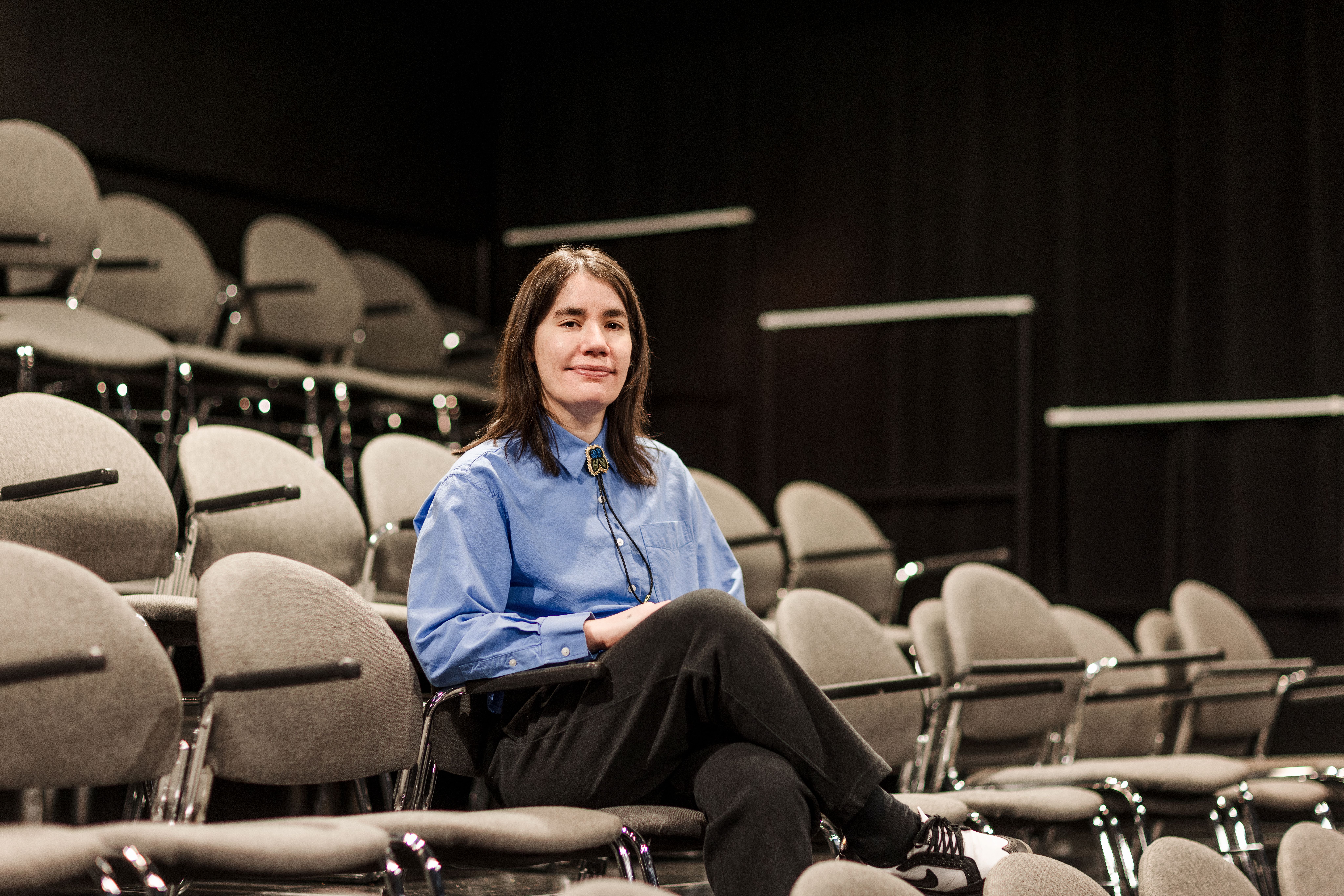
Portrait of Camille Larivée, © Katya Konioukhova
#madeinquebec
Monday May 4, 2026 9:00am - 10:00am EDT
Montreal 4-5

10:30am EDT

It's All Coming Back: A Roundtable Discussion on Reference in Art Libraries
Monday May 4, 2026 10:30am - 11:45am EDT
This roundtable session is a follow-up to the first "Reference in Art Libraries: a roundtable discussion" offered at the ARLIS Conference 2024 in Pittsburgh. Reference providers will lead discussion by answering questions investigating the current state of reference collections and services offered in art libraries, as well as reflecting back on changing approaches over time. Speakers will contribute examples from their work weeding, shifting, adjusting collections, and providing research consultations with students and researchers. The theme of resistance will also inform these conversations. Are we resisting traditional approaches to reference services and spaces? How can providing reference interactions push back against AI offerings of research support? This program is also timely as the end of 2025 marked the 20th anniversary of "Guide to the Literature of Art History" volume 2 (ALA Editions, 2005).

Moderators
avatar for Jenny Davis

Jenny Davis

Research Services Librarian, Avery Architectural & Fine Arts Library, Columbia University
avatar for Annalise Welte

Annalise Welte

Librarian for Research Services, Institute of Fine Arts, New York University
Speakers
TC

Tess Colwell

Arts Librarian for Research Services, Yale University
avatar for Jenna Dufour

Jenna Dufour

Research Librarian for Visual Arts, University of California, Irvine
avatar for Chris Landry

Chris Landry

Scholarly Communications Librarian, OCAD University
avatar for Joey Vincennie

Joey Vincennie

Reference Lead Librarian, Frick Art Research Library, The Frick Collection
Joey Vincennie (he/him) is the Reference Lead Librarian at the Frick Art Research Library. His research on artists' books and art book fairs has been published in Art Documentation. Joey currently serves as a co-moderator for ARLIS-L and as a member of the Travel Awards subcommittee... Read More →
Sponsors
Monday May 4, 2026 10:30am - 11:45am EDT
Montreal 4-5

1:15pm EDT

Reframing Resistance: Reimagining Libraries through Reuse
Monday May 4, 2026 1:15pm - 2:45pm EDT
The information landscape is rapidly shifting, from print to electronic and from still text to immersive media. Libraries must employ adaptive strategies to navigate this new terrain, not merely resisting the seismic shift, but reinventing our collections. As we move into a digital landscape, art and design students still yearn for the tactile and material experiences that libraries offer. Compounding this challenge is the era of scarcity in which we find ourselves. As art librarians, we can reframe our thinking—not by seeking new resources, but by exploring what we might do with what we already have. What can we reuse or reimagine to stimulate renewed enthusiasm for research and learning?

Art librarians can embrace change by reconsidering how our collections relate to the past, present, and future. This panel centers on four case studies that highlight these time frames followed by a moderated discussion about the application of this sustainability mindset to the broader field of information work.

In REviving Discards, we learn about a library undergoing a transition to a more digitally-focused resource, where print books are being replaced with ebooks, slide collections are being replaced with online repositories, and outdated periodicals are being discarded for digital options. These tangible resources have completed their library service, but what if we could give them a second life? The library has developed a new collection of visual resources where students can explore these retired assets and transform them into new creations.

With libraries shifting to electronic resources, REactivating Spaces becomes crucial. Empty shelving and now inactive areas provide places for students to engage with new opportunities. On the arts level of a university library, the vacated periodicals area was transformed into a student exhibition space. Blank walls in the makerspace were lined with material samples, and the defunct dumbwaiter offered the potential for small displays of miniature books.

In REarranging Collections, due to budget reductions a librarian has been unable to purchase new print publications for her art and architecture library. Rather than let the stacks become stagnant, she is rearranging the current collection to create new curated browsing opportunities. Some collections are permanent, such as crafting a graphic novel collection, while others are temporary displays that expose connections between subjects and titles, such as highlighting books on architecture from the arts section.

Yet, what is absent from a collection can tell us as much as what is present. If what our collections contain is indicative of what society values, then absence reveals what society has found unimportant or, worse, chosen to suppress. REclaiming Lost Narratives examines how a librarian worked with a Women in Architecture and Design class to reclaim lost narratives of female designers by creating an exhibition of book covers, based on library research, dedicated to the monographs that should have been and could potentially be in the future.

By adopting a sustainability mindset, we resist the potential decline of libraries due to budget cuts and online convenience and reimagine what is possible with the resources at hand.
Moderators
avatar for Anaïs Grateau

Anaïs Grateau

Head of the Henry Clay Frick Fine Arts Library, University of Pittsburgh Library System

I'm the Head Librarian of the Henry Clay Frick Fine Arts Library at the University of Pittsburgh Library System. I studied art history and museum studies with an emphasis on modern and contemporary art at the École du Louvre in Paris. I have been living and working in the United... Read More →
Speakers
avatar for Jill Chisnell

Jill Chisnell

Arts and Humanities Librarian, Carnegie Mellon University Libraries
SH

Stefanie Hilles

Arts and Humanities Librarian, Miami University
Stefanie Hilles is the Arts and Humanities Librarian at Wertz Art and Architecture Library at Miami University, where she liaisons to the art, architecture and interior design, and theatre departments. She also teaches zine workshops to a variety of majors across campus.. She holds... Read More →
SM

Shannon Marie Robinson

University of Southern California
Monday May 4, 2026 1:15pm - 2:45pm EDT
Montreal 4-5

3:45pm EDT

Ch-ch-ch-changes: turning to face the strange (changes in your library)
Monday May 4, 2026 3:45pm - 5:00pm EDT
In French we say, "plus ça change, plus c'est la même chose," meaning "the more things change, the more they stay the same." Some of the changes we have experienced in the field of librarianship are here to stay, but some are not. From generative AI to library closures and job changes, change is all around us.

The Roots of This Tree Are Rotten!: Resisting the Institutional Push for GenAI
Speakers: Torie Quiñonez


The rapid rise of AI integration into our lives this past year has been startling. At all levels of the academy, educational organizations are announcing partnerships with tech companies seemingly without any critical consultation, thoughtful deliberation, or educator input. These expensive alliances are coming at a time of extreme budgetary contraction. Why are universities investing massive amounts in contracts with private companies when budgets are so tight? Who benefits? The call of “Will our students be ‘AI’ ready?” drowns out the more important question: “is AI ready for our students?” Research shows that Gen AI tools are often “confidently wrong,” offer up biased and racist responses, extract a devastating toll on the environment, provide venues for bad actors to exploit vulnerabilities, and harm critical thinking and analytical skills through repeated use and reliance.
While some educators talk about “ethical use of AI,” we argue that there is no ethical use possible when looking at all parameters. Even before addressing the resultant systemic issues, the tools themselves were created using stolen content and are currently being argued over in 47 legal cases (and counting). Our student artists and writers are in the crosshairs of these ethical issues. AI “helpers” have been inserted into many products without a stated desire or demonstrated need for them. The use cases we are given to convince us to uncritically adopt tools we never asked for are at best offering moderate levels of time-saving “efficiency,” and at worst replacing opportunities for actual care and communication with inferior electronic substitutes. Are they actually helping students learn? Or are they instead creating an added layer of obfuscation between a human and the information sources they need, while furthering disinvestment in education and people?
In the face of a forced narrative of tech inevitability, we want to give our university community another option: resistance. In the tradition of DIY resistance literature that came before us, we created a zine to provide a voice that goes against the stream of hype and normalization. In "The Roots of this Tree are Rotten!" we explain how we were inspired to look critically at the hype and call out GenAI, especially the way it has been an engine of shoddy substitutes for the things our students actually need: care, support, and mentorship. Instead of giving in to the convenient insistence that “it’s not going away,” we instead propose ways to resist, opt out, and push back on the narrative that “everyone is using it.” Attendees will learn about some of the major ethical concerns about Generative AI, how to identify and pop hype bubbles that push a narrative of tech inevitability, and ways to both resist uncritical adoption of GenAI tools and normalize opting out.

Final Chapters: How Academic Art Librarians Navigate Institutional Closure
Speaker: Becky Alexander


In the past decade, with increasing frequency, academic librarians at art colleges have arrived at work to learn that the libraries they have stewarded for years—sometimes decades—are closing along with their institutions. This is an unprecedented professional experience for which few librarians have experience or training. What does it mean to do the work of permanently closing a library under circumstances that are often confusing and emotionally fraught, and for which there are no clear or “right” answers?

This talk presents research by Becky Alexander, a librarian at the now-closed San Francisco Art Institute and currently an archivist at the San Francisco Art Institute Legacy Foundation + Archive. Drawing on interviews with ten other academic art librarians who experienced institutional closure, she examines how librarians navigated the dismantling of collections, the preservation of archives, the support of students and faculty, and the personal and professional ramifications of losing both a workplace and a community. By foregrounding librarians’ lived experiences, this presentation shares lessons learned, ethical considerations, and forms of solidarity that can help guide others facing similar institutional crises.

Lineages of Solo Librarianship at the Center for Book Arts
Speakers: Gillian Lee, Nicole Rosengurt


In this talk, the former and current librarian at a small educational arts nonprofit discuss the challenges and successes of the transfer of responsibilities, and the real do’s and don’ts of leaving and beginning a “lone arranger” position.

We also dive deeper into the human connection and the professional lineage inherent to becoming a predecessor or a replacement. What relational and institutional considerations does one make when leaving a job? What relationship can grow between the “old” librarian and the “new” librarian? How can this relationship be grounds for fertile connection on a small scale that then blooms outward?

This talk also explores the ways in which the two librarians employ a collection of artists’ books and zines to be a powerful stage for resistance. Examples include: (re-)introducing students to physical/analog printing and binding technologies through artists’ books; small space and lone-arranger status allowing changes to curricula; teaching self-publishing to encourage self-expression; and making curatorial choices regarding accessioning new works.
Speakers
avatar for Torie Quiñonez

Torie Quiñonez

Arts & Humanities Librarian, CSU San Marcos
avatar for Nicole Rosengurt

Nicole Rosengurt

Librarian & Collections Manager, Center for Book Arts
Moderators
VR

Valérie Rioux

Universite de Montreal
Monday May 4, 2026 3:45pm - 5:00pm EDT
Montreal 4-5
 
Share Modal

Share this link via

Or copy link

Filter sessions
Apply filters to sessions.
Filtered by Date -