In French we say, "plus ça change, plus c'est la même chose," meaning "the more things change, the more they stay the same." Some of the changes we have experienced in the field of librarianship are here to stay, but some are not. From generative AI to library closures and job changes, change is all around us.
The Roots of This Tree Are Rotten!: Resisting the Institutional Push for GenAI
Speakers: Torie Quiñonez
The rapid rise of AI integration into our lives this past year has been startling. At all levels of the academy, educational organizations are announcing partnerships with tech companies seemingly without any critical consultation, thoughtful deliberation, or educator input. These expensive alliances are coming at a time of extreme budgetary contraction. Why are universities investing massive amounts in contracts with private companies when budgets are so tight? Who benefits? The call of “Will our students be ‘AI’ ready?” drowns out the more important question: “is AI ready for our students?” Research shows that Gen AI tools are often “confidently wrong,” offer up biased and racist responses, extract a devastating toll on the environment, provide venues for bad actors to exploit vulnerabilities, and harm critical thinking and analytical skills through repeated use and reliance.
While some educators talk about “ethical use of AI,” we argue that there is no ethical use possible when looking at all parameters. Even before addressing the resultant systemic issues, the tools themselves were created using stolen content and are currently being argued over in 47 legal cases (and counting). Our student artists and writers are in the crosshairs of these ethical issues. AI “helpers” have been inserted into many products without a stated desire or demonstrated need for them. The use cases we are given to convince us to uncritically adopt tools we never asked for are at best offering moderate levels of time-saving “efficiency,” and at worst replacing opportunities for actual care and communication with inferior electronic substitutes. Are they actually helping students learn? Or are they instead creating an added layer of obfuscation between a human and the information sources they need, while furthering disinvestment in education and people?
In the face of a forced narrative of tech inevitability, we want to give our university community another option: resistance. In the tradition of DIY resistance literature that came before us, we created a zine to provide a voice that goes against the stream of hype and normalization. In "The Roots of this Tree are Rotten!" we explain how we were inspired to look critically at the hype and call out GenAI, especially the way it has been an engine of shoddy substitutes for the things our students actually need: care, support, and mentorship. Instead of giving in to the convenient insistence that “it’s not going away,” we instead propose ways to resist, opt out, and push back on the narrative that “everyone is using it.” Attendees will learn about some of the major ethical concerns about Generative AI, how to identify and pop hype bubbles that push a narrative of tech inevitability, and ways to both resist uncritical adoption of GenAI tools and normalize opting out.
Final Chapters: How Academic Art Librarians Navigate Institutional Closure
Speaker: Becky Alexander
In the past decade, with increasing frequency, academic librarians at art colleges have arrived at work to learn that the libraries they have stewarded for years—sometimes decades—are closing along with their institutions. This is an unprecedented professional experience for which few librarians have experience or training. What does it mean to do the work of permanently closing a library under circumstances that are often confusing and emotionally fraught, and for which there are no clear or “right” answers?
This talk presents research by Becky Alexander, a librarian at the now-closed San Francisco Art Institute and currently an archivist at the San Francisco Art Institute Legacy Foundation + Archive. Drawing on interviews with ten other academic art librarians who experienced institutional closure, she examines how librarians navigated the dismantling of collections, the preservation of archives, the support of students and faculty, and the personal and professional ramifications of losing both a workplace and a community. By foregrounding librarians’ lived experiences, this presentation shares lessons learned, ethical considerations, and forms of solidarity that can help guide others facing similar institutional crises.
Lineages of Solo Librarianship at the Center for Book Arts
Speakers: Gillian Lee, Nicole Rosengurt
In this talk, the former and current librarian at a small educational arts nonprofit discuss the challenges and successes of the transfer of responsibilities, and the real do’s and don’ts of leaving and beginning a “lone arranger” position.
We also dive deeper into the human connection and the professional lineage inherent to becoming a predecessor or a replacement. What relational and institutional considerations does one make when leaving a job? What relationship can grow between the “old” librarian and the “new” librarian? How can this relationship be grounds for fertile connection on a small scale that then blooms outward?
This talk also explores the ways in which the two librarians employ a collection of artists’ books and zines to be a powerful stage for resistance. Examples include: (re-)introducing students to physical/analog printing and binding technologies through artists’ books; small space and lone-arranger status allowing changes to curricula; teaching self-publishing to encourage self-expression; and making curatorial choices regarding accessioning new works.
Speakers 
Arts & Humanities Librarian, CSU San Marcos
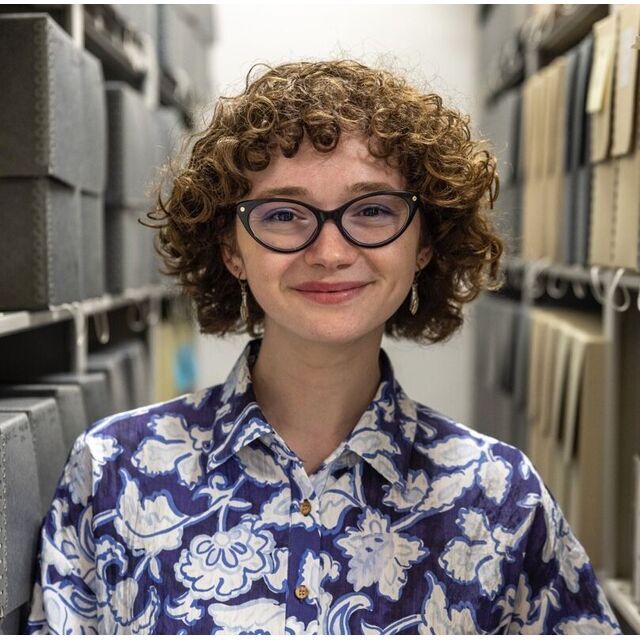
Librarian & Collections Manager, Center for Book Arts